My Twitter Feed

Showing posts with label Video. Show all posts

Apr 5, 2011

The Funniest Gym Idiot Videos Ever...(Even if You Don't Work Out!)


...this is so you DON'T DO THESE THINGS (not only will you look dumb, but you can actually really hurt yourself). If you need an extra dignity-saving, last-chance-not-to-be-a-gym-noob reminder, check out my must-read post on "How NOT to Look Like an Idiot at the Gym."

1. Planet fitness + lunk alarm + huge dude freaks out = hilariousness.


2. Not the fish! I'd totally do this by accident...


3. Spiderman! I'd love to see this at my gym honestly. 


4. It legitimately looks like his arms are gonna snap off.


5. I guess noone ever told him momentum isn't a muscle...


6. This one's not really funny, it's just really, really stupid. PLEASE don't deadlift like this, you will mess up your back horribly badly.


7. I'd totally be done with my workout if I put all that weight on the bar just for it to fall off...use collars!


8. 2 shoes at once, treadmill gangster!


9. How was this ever a good idea, lol?


10. Ow...increases flexibility though.


11. Had to include this even though it's horrible...


Oh, and if you know of any other awesome gym idiot videos post them below!

Mar 1, 2011

Protein...EpicMealTime Style

Protein, protein, and some more protein. 2,530 grams worth...this might just be the most epic post-workout meal ever created.


Feb 15, 2011

Soda Makes You Fat...


WOW this is so horribly disgusting I almost just puked...but I freaking LOVE IT! Soda sucks, it makes you fat plain and simple. Watch the vid and maybe you'll agree with me :)

Like the Knicks always say...Go New York go New York go! I approve. The music's pretty catchy too haha.


Nov 17, 2010

Practice Safe Sex with The Situation!

The golden rule (or one of them): Practice safe sex! Maybe The Situation can help nail that concept home haha. Video's hilarious!

Nov 8, 2010

Video: Proper Bench Press Form

Every time I'm in the gym I see people bench pressing incorrectly...and it sucks because they're cheating themselves out of getting the best chest workout possible. Not only does bad form reduce the amount of stimulation on the chest muscles, but it also puts excessive stress on the shoulder girdle and/or arms. By doing this you risk injuring the shoulders, lose a lot of power, and insufficiently work the chest muscles. If you dumbbell/barbell bench press regularly, watch this video and make sure your form matches up. A little change can make a HUGE difference.

Sep 22, 2010

Situational Training

I love Jersey Shore...it's freaking hilarious. If you haven't seen this Vitamin Water YouTube video check it out, it's pretty amazing.

Jul 27, 2010

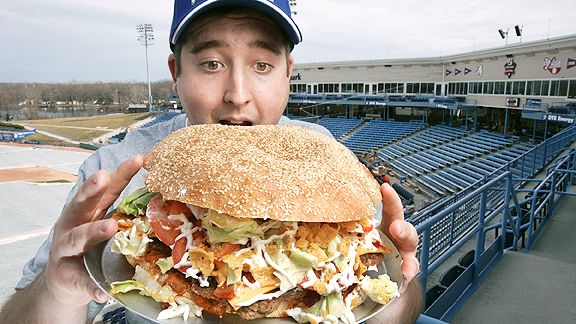
ESPN Outside The Lines Reveals Extremely Unsafe Stadium Food


Do you have any idea what the hell is in the food you're eating at a baseball stadium? If you love stadium food and want to keep regarding it highly, then I really suggest that you don't read on any further. ESPN's "Outside The Lines" recently aired a special that revealed the extremely unsanitary and unsafe conditions at popular stadium concessions and restaurants. Getting an inside look at how certain stadium food is prepared really makes you realize how disgusting, gross, and wrong it is. ESPN OTL reviewed health department inspection reports for all 107 stadiums nationwide and found that the majority had multiple critical health violations. These violations included serving raw food, improperly storing/refrigerating food, workers bleeding into food and serving it, bugs and rodents in concessions, and even finding a pus filled band-aid in a pot of clam chowder. It's absolutely disgusting and has caused numerous people to get sick from salmonella poisoning and other forms of food poisoning. For anyone who's a sports fan this is a must read. To give you an example of what OTL found here's what they found at a few popular US stadiums:
  • Yankee Stadium- 48% of vendors were in violation of health standards. Five hot dogs registered 91 degrees in a hot-holding unit when they were supposed to be no cooler than 140 (aka raw). Inspectors also had a vendor dump a bottle of Chivas Regal whiskey containing dead fruit flies.
  • Madison Square Garden- 61% of vendors were in violation of health standards. At one stand, inspectors found "53 mouse excreta" (38 on top of a metal box underneath the cash registers in the front food-prep/service area and 15 on top of a carbonated-beverage dispensing unit.)
  • Sun Life Stadium- 93% of vendors were in violation of health standards. In June 2009, an employee complained anonymously that small insects and other debris were blended into frozen alcoholic beverages at a stand where equipment wasn't being cleaned. When inspectors checked, they issued a critical violation for a buildup of slime inside the frozen drinks machine.
Check out http://sports.espn.go.com/espn/eticket/story?page=100725/stadiumconcessions for the full report, including an interactive map highlighting different stadiums.

Apr 27, 2010

Bucks Mascot Dunks Off 20 Foot Ladder

Check out this ridiculous dunk by the Milwaukee Buck's mascot. He's pretty crazy athletic, especially in that costume.

Mar 25, 2010

Understanding Insulin, HFCS, and Carbs -- Window to a Healthier, Leaner You

Today I have 2 amazing videos explaining the insane impact that carbs and insulin have on the way that our body deals with body fat. These videos reinforce what I've been advocating for so long, that losing weight is not as simple as calories in vs. calories out. Fat storage and fat burning are determined by the hormones in our body, specifically insulin. If you've been dieting and aren't seeing the weight or fat loss you're looking for, tweaking your diet to manipulate insulin levels effectively may be the answer! I'll also explain High Fructose Corn Syrup (HFCS).

Here's how carbs, insulin, and blood sugar interact:
  • Carbs are key to fat storage and fat loss.
  • Different carbs are rated on an index called the Glycemic Index or GI. The GI is a measure of how fast carbs raise our blood sugar levels. The higher the GI a food has (on a scale of 100), the faster these carbs will be digested and create a blood sugar response. Pure glucose is used as a reference point and is rated as 100. Something like wheat bread will have a much lower GI than white bread. Go to http://www.southbeach-diet-plan.com/glycemicfoodchart.htm for an accurate list of GI values for common foods.
  • The GI of a particular carb can be effectively lowered based on the Glycemic Load or GL. When you consume carbs at the same time as fat or protein they will digest slower and raise blood sugar levels at a slower rate.
  • Insulin's major function is to tell our body when to store nutrients, including fat. Insulin determines when the body store's fat and releases fat. Body fat manipulation is dependent on insulin!
  • Insulin takes blood sugar that circulates (blood sugar levels rise when we eat carbs, which are then broken down into glucose) through our bloodstream and shuttles it into the cells of our body. 
  • Muscles are the largest storage site of blood glucose. The blood glucose stored in our muscles is known as glycogen.
  • Think of our muscles as a gas tank. When we have an abundance of glucose circulating through the bloodstream insulin shuttles that glucose into our muscle cells until they're full and can't accept anymore glucose. 
  • Once muscle cells are full they decrease the sensitivity of their insulin receptors which signals to the body that no more glucose can be transported in.
  • When this happens it potentially creates a glucose backup. Any excess glucose in the bloodstream no longer has anywhere to go and it starts to build up in our bloodstream, which signals insulin to rise. Insulin's function in the body is to control high blood glucose levels. When insulin levels rise we begin to store any excess glucose as body fat. 
  • When we constantly spike our insulin levels by ingesting really high amounts of carbs at once or by eating a lot of simple/refined carbs, we develop insulin resistance. Over time our bodies become unresponsive to insulin, we can't control blood sugar levels, and we develop Type-II Diabetes.
  • A few of the ways to help control insulin levels include:
    • Eat slow digesting, low-GI, complex carbs
    • Eat carbs with protein and healthy fats
    • Split the day into 5-6 smaller meals and include protein/fats with any carbs consumed. Eating frequent, small meals stops blood sugar levels from spiking to extreme levels and helps prevent a backup of glucose in the blood...which of course is stored as body fat.
  • The one time it's advantageous to eat high GI carbs (fast digesting) is after an intense workout. Working out or doing any other kind of intense physical activity burns a lot of calories and depletes the stored glycogen in our muscles. Exercising empties our tanks. It's really important to refill those tanks as soon as possible to facilitate new growth and prevent muscle breakdown/loss. Spiking insulin with high GI carbs allows us to quickly shuttle glucose, protein, and other nutrients to our hungry muscles as quickly as possible.
  • To lose fat insulin levels have to drop. 
  • The enzyme that removes body fat from fat cells is called Hormone Sensitive Lipase or HSL. HSL is sensitive to insulin levels. It functions when insulin levels are low, and is suppressed when insulin levels are high.
  • If insulin is too high, even if you're in a caloric deficit, HSL will not be signaled to function and you'll be physically incapable of losing body fat! All you'll do is burn off your muscle and maybe gain a little bit of fat...not good.

 The High Fructose Corn Syrup (HFCS) Story:
  • There are many different types of sugar, a few include: lactose, which is found in dairy products, fructose, which is found in fruits, and glucose which is a product of carbohydrate breakdown. These sugars are not chemically identical and have much different effects on our blood sugar levels. Most fruits have a relatively low GI. Even though they're high in sugar, they're slower digesting because they're primarily composed of fructose (which digests slower than other types of sugar).
  • Sugar is made up of 50% fructose and 50% glucose. HFCS is a chemical meant to imitate sugar that's made up of a higher % of fructose depending on the type (hence the name "high fructose"). Typical HFCS is 55% fructose, 45% glucose, but some variations can go as high as 92% fructose. 
  • The issue with HFCS is that our body, in particularly the liver, isn't used to such a high % of fructose in normal sugar.
  • The high fructose component of HFCS is sent directly to the liver and completely bypasses the bloodstream. In the 1000 years of existence our liver has never had to deal with such a high amount of fructose in sugar. It doesn't know what to do with it--so it converts it into fat immediately and sends it out to the fat tissue to be stored. 
  • What's even worst is that because HFCS skips the bloodstream it has no effect on our hunger levels and we keep eating more and more. Because we never get any hungrier this creates an endless cycle of HFCS consumption, fat gain, and ultimately obesity. NASTY STUFF!

 Enjoy the videos!


Free Daily Deals on Fitness Stuff!